There two issues here: one is water pressure at the main, and the second is volume of water, which is a determined by pipe size.
A main water supply pipe or service line could be as small as a half inch in diameter - and possibly corroded, at that.
Water pressure is pretty much a constant thing you have to work around, but pipe sizing can be changed. Your main water supply
pipe should be your first consideration before adding any new fixtures onto an old system.
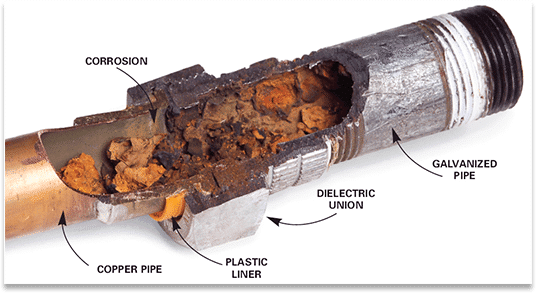
As pipes close down due to corrosion, they lose the capacity to carry enough volume to deliver a desired
amount of water at the taps. Some older homes have pipes that are too small and undersized for modern requirements
and demands.
Your main shut off valve (property line, which is often near the street or sidewalk, is connected to the supply pipe and then to the water meter inside of the house (close to the front wall most of it).
You should be able
to trace the probable path of the pipe to your house. Replacing the pipe often means digging a trench from the property line (main shut off valve) to your house.
The pipe might be running under a driveway or sidewalk, and we must find either an alternative route
or an alternative to digging in order to replace it. Check our new technic to do so at Trenchless solution.
Small hole on a property line is everything what we need to install full run of new copper water supply line with connection to your water
meter or the hot water tank.
Larger diameter of the pipe brings to your house MORE water.
Low water pressure
Increase water pressure
First, check to see if aerator screens or water-saving devices are clogged.
Remove the heads from the affected faucets, and test the water flow.
If that solves the problem, you can just replace the clogged pieces.
Sediment can build up in your water heater, reducing the flow of water
over time—especially in areas with hard water. Drain your water heater
every few months to remove this sediment.
Another possibility is that supply lines are too small; if so, you should increase their size.
If your line is 1/2" you can upgrade to 3/4" or even 1" by trenchless technology installation by AnTa Plumbing.
TRENCHLESS TECHNOLOGY
Water Supply Line installation
Get New Copper 3/4" or 1" water supply pipe for your home!
More water - use your shower, and dishwasher, and laundry on the same time!
Clean copper pipe instead of galvanized rusted pipe!
To book an appointment with our Technician to install new copper water supply line 3/4" or 1" call to the office
and we will be happy to assist you (416) 231 3331
Water Supply Service
AnTa Plumbing and Drain Company upgrades water supply lines, change pressure in your plumbing system,
relocate water meter, change lead pipe to copper pipe, fix frozen pipes.
In the water supply system pipe of increasingly smaller diameter is called for as
the supply pipes branch out from the water main that enters the house. Water in the main is under
tremendous water pressure — far more than can be safely handled by the individual sinks, toilets and appliances in the home.
The successive drop in pressure as the water moves from main, to primary supply lines to secondary supply lines ensures
that each appliance receives an appropriate amount of pressure.
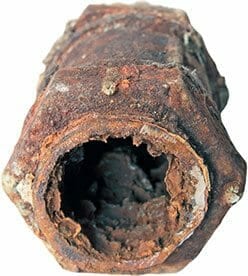
Water supply pipe. Look inside!
This picture is real! Water supply pipe becomes rusted and full of sediments with time.
When you use tub water to cook or drink make sure that you install a water filter or change your water supply line to new copper.
First, it gives you more water (did you ever feel that second floor bathroom doesn't have enough water to take a shower when
your house members wash dishes?). Secondly, you have less rust/sediments in every cup.
We made a lot of pictures from real projects just to show what water we drink and what we can do about it.
Water supply system.
Your home plumbing consists of two separate systems, the water service system and
drain-waste-vent system. The water service system transport potable water (water that is fit for human consumption and use)
from a water treatment plant through a water main and into the home. The piping is split into two layouts. One carries water directly to the water softener,
if you have one, then to the water heater, and through hot water pipes to the various fixtures where hot water is needed. Like the hot water system,
the cold water branch routes the water to various fixtures,
including the sink, toilets, bathtubs and laundry equipment, and also to exterior faucets called hose bibs or sill cocks.
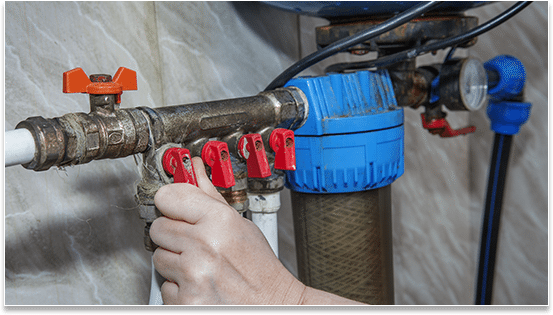
At the water service entry you will find a water meter and a main shutoff valve. The water meter , of course, measures water usage for billing by the utility company.
The gate valve allows you
to turn off the water flow to the entire house, in case of emergency or to make needed repairs. There is another shutoff valve beneath the toilet tank or water closet.
This valve permits you to shut off the water service the toilet without having to shut off the water to entire house. In oldest houses this may be the only fixture
shut off valve and you may have to shut off the entire
system at the main shut off valve to work on faucets in other fixtures. In modern houses, there are often service shut off valves at sinks and laundry equipment, so you
can shut down the water supply fixture by fixture instead of having to shut down the entire house.
Because the water supply pipes are pressurized, they can be smaller than drain pipes, which operate by gravity. The
pressurized supply pipes and fixtures are naturally more subject to leaks, due to the pressure. If pressure on the street
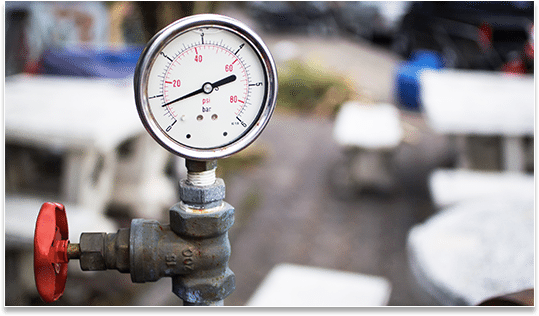
supply pipe is over 80 pounds per sq. inch (psi) there is a pressure reducing valve at the water entry. The water pressure in your house is 80 psi or less.
Lead pipe. copper pipe.
Healthy pipe. Higher pressure
In past years, lead has been used in a variety of applications, such as water service supply pipes,
drainage pipes, flashings for stacks, shower stall safes and water closet connections.
Up until the late 1920s, lead pipes were still used, although not extensively, in residential plumbing system.
The water from your water treatment plant might be lead-free, but it can pick up some of this metal along the way.
You can take some precautions:
Allow the water to run for a minute or so before consuming it (you're drawing off water that has been sitting in the pipes and has the highest lead content)
Never use hot tap water for cooking or preparing baby formulas (hot water leaches more lead from the pipes.)
Install a water filter that removes lead.
After all this review you can find out yourself that lead pipe has to be changed to
copper pipe.
Toronto has more than 500,000 water services connections and almost 65,000 of these are made of lead.
Approximately 3,500 are replaced each year.
Our water supply line services
> New water supply line
> Water leak repair
> Water pressure control
> Water meter relocation
> Maintenance plumbing system
> Lead pipes exchange
> New rough-in installation
Trenchless technology for water pipe installation
Trenchless rehabilitation refers to such construction methods as
thermoformed pipe, pipe bursting, mechanical spot repair for the repair,
rehabilitation, or replacement of existing buried pipes and structures without excavation, or at
least with minimal excavation. Sliplining and thermoformed pipe lining involve pulling a new liner
through an existing pipe, then applying heat and/or pressure to force the liner to expand to fill the pipe.
Pipe bursting fractures a pipe from the inside and forces the fragments outwards while a new pipe
is drawn in to replace the old. The other methods are primarily for fixing spot leaks.
Trenchless rehabilitation methods are generally more cost-effective than traditional exhume (dig) and replace methods.
AnTa Plumbing Drain Contractor use piercing tools for water lines installation. Piercing tools are ideal for installing utilities
under existing landscapes and / or structures (your driveway, your side walk, garden, etc.) with minimal disruption.
These pneumatic-powered tools create a compact hole
that allows us to install underground water lines and keep your landscaping with no damage.
Typically, a customer would build an addition to their home, and all they would currently have is a 1/2-inch waterline.
Because of the addition, they would need to get larger diameter service to the entire residential system.
To get more water volume into the house, customer would upgrade to a 3/4-inch line, or to a 1-inch line.
To reroute the water line, we as a contractors would use the pneumatic tool to punch in a new bore for the larger new line.
Instead of digging a 40-foot trench, AnTa Plumbing Drain technicians only be digging two small holes, which create a huge cost savings for customer.
Call to book an appointment with our professional Plumber.
New copper pipe in the house
On this picture you can see how new water supply pipe gets to the house.
Plumbing and Drain Services in Toronto and GTA: Scarborough, North York, East York, Toronto East, Toronto West, North Toronto,
Downsview, Mississauga, Brampton,
Oakville, Burlington, Etobicoke,
Milton, Vaughan, Richmond Hill, Mimico, Riverdale, Rosedale, Forest Hill, High Park, Barrie