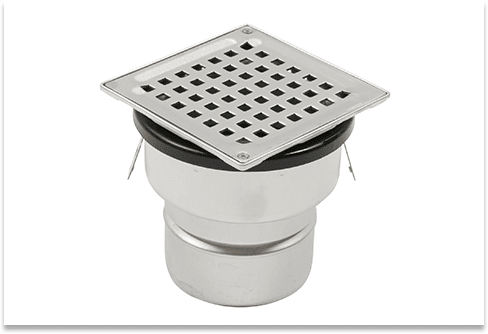
Floor Drain
Sewer Backups.
Plumbing systems usually function for years without needing attention, and like many basic utilities
they are often forgotten until a problem arises. Floor drains are collection points which remove wash
water and other liquid wastes from a work area and carry them away through pipes or ditches for disposal.
Floor drain is a drain which received water from a floor of a building, so that water passing
down through a strainer or grate enters a connected drainage pipe, and includes any auxiliary
part that is located between the strainer and the connected pipe or a nipple.
As shown in DWV picture plumbing,
the sanitary sewer line drains toilet waste, laundry tubs, and the basement floor drain
to the sanitary sewer main in the street. Clean storm water and ground water is handled by downspouts,
footing drains, and sump pumps.
Often basement flooding is caused by these two sewer systems being interconnected.
Some houses have the downspouts (from 2009 all homeowners in Toronto required to disconnect downspouts from sewer system),
weeping tile, and/or the sump pump connected to
the sanitary sewer service.
During a heavy rain, storm water enters the sanitary sewers,
causing backups into one house and overloading the main lines, contributing to backups in other houses most of the time trough the floor drain fixtures.
Sewer lines or plumbing lines can be plugged by grease, waste, tree roots, breaks in the
pipe.
Floor drain float plug. Back flow preventer.
Plug with a float. It allows water (the laundry tub overflows or other spillage occurs) to drain out of the basement. When the sewer backs up,
the float rises and plugs the drain. To install floor drain float plug plumber has to check you sewer system with
CCTV to be sure that
system is deep enough (more then 1 foot) and no pipes are shifted or broken. Otherwise waste will back up to basement floor trough the concrete slab.
More information about sewer backup
|